Zoning Hearing Board Rejects Link Logistics Motion to Quash and Sets a Second Appeal Hearing for December 1st
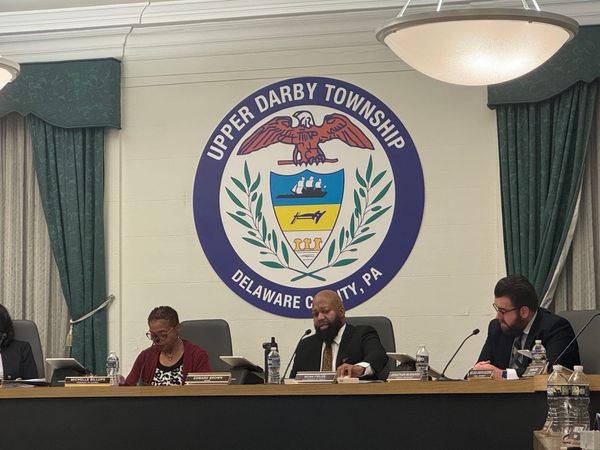
Trainer’s zoning board voted 2-1 Nov. 17 against quashing a church’s appeal of a ruling that a data center is allowed by right on Ridge Road. The church makes its case Dec. 1.

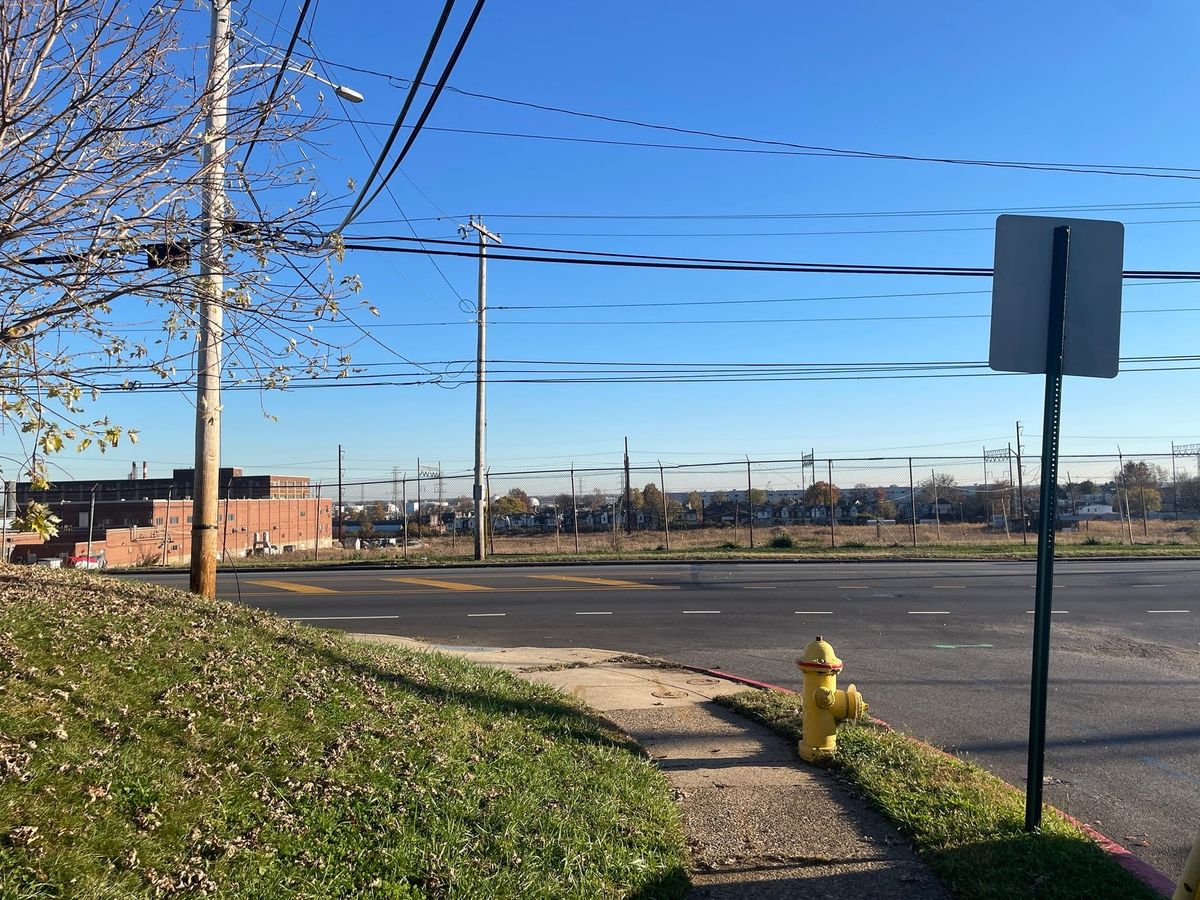
Background: Developer Link Logistics, through landowner B9 Ridge Owner LLC, purchased a lot at 4401 Ridge Road in 2022 and received approval to build a 443,300-square-foot warehouse on the site, which would be 90% in Trainer and 10% in Lower Chichester. Link Logistics later asked both municipalities for preliminary zoning determinations on whether a data center is permitted at the site. In a July 22 letter, Lower Chichester zoning officer Frank E. Hendron said a data center is not a permitted use on the township’s portion of the lot. However, in August, Trainer’s zoning officer issued a preliminary determination that a data center is allowed by right. The Trainer United Methodist Church filed an appeal to that determination and a hearing was held at the International Brotherhood of Electrical Workers Local 654 hall on Nov. 17.
Considerations of the Hearing
Preliminary zoning determination
Trainer’s zoning officer issued a preliminary determination that a data center qualifies as a by-right use within the I-2 Industrial district. The preliminary determination is an early stage of development. The purpose is to determine if there are significant zoning issues with the proposed use of the land before the landowner pursues other approvals. It does not constitute a permit or approval. Before Link Logistics can begin constructing its data center, it still needs to receive permission from Trainer Borough through land development review, the Delaware County Planning Commission, PennDOT, fire marshals, the state Department of Environmental Protection (including NPDES stormwater permits), DELCORA (sewage) and PennDOT’s Bureau of Aviation (airport safety).
Appeal of the zoning determination
The Trainer United Methodist Church filed an appeal to the zoning determination. The church is located at 3705 W. Ninth St., which places it about 0.6 miles from the site of the proposed data center. The appeal makes two arguments. The first is that the zoning code does not allow a data center by right and the zoning officer was incorrect in issuing that determination. The second is a substantive validity challenge, claiming that the zoning code itself is inconsistent and lacks objective standards, which it says invites arbitrary or inconsistent enforcement.
Motion to quash
The landowner, B9 Ridge Owner LLC, moved to quash the church’s appeal. This motion claims that there is no proof that the Rev. Hilda M. Campbell has the authority to speak on behalf of the church. It also claims that the church has no standing to pursue an appeal as the church has not established itself as an “aggrieved” party, largely due to its distance from the site. The motion states that a preliminary determination does not require materials or fully developed plans that would be necessary for an approval or building permit, so the zoning officer did not have to make final findings at this stage on sound levels, vibration or other impacts. Those disclosures would be required later in the approval process. These claims are discussed further below.
Address confusion
The hearing board questioned why some reports mentioned 4401 Ridge Road and others used 4001 Ridge Road. Leonard Altieri, the attorney for landowner B9 Ridge Owner LLC, said that when the lot at Congoleum was purchased, its address was 4401. The owner then subdivided the lot, and the Delaware County Board of Assessment gave the new parcel the address 4001 Ridge Road, and that is the parcel where the data center would be built. Confusion arises with the fact that 4001 Ridge Road shows a different site on services like Google Maps, located at the intersection of Ridge Road and Main Street. Altieri said Google has not yet updated its maps for the new parcel and that the address on file with the Delaware County Recorder of Deeds is 4001 Ridge Road.
The Hearing
Appellant's case
The Zoning Hearing Board’s solicitor, John Rendomonti, began the hearing by inviting the appellant to speak. Campbell spoke to the board. She said the church had not received written notice of the hearing, which she said Section 908 of the Municipalities Planning Code requires, and could not obtain information about applying for party status despite repeated requests. The reverend requested that they be given more time as they have not been able to find an attorney that they can afford. The $750 fee to file the appeal was already a financial burden to them, and now they need to find a lawyer who can represent them pro bono.
The reverend added that a man named Paul, who said he was an electrician with the union whose hall hosted the hearing, had asked her to drop the appeal and offered free electrical work at the church if she did. She said she felt pressured by the offer. She also said Link Logistics representatives had texted her about a community benefits package, and that Altieri called her on a Sunday morning, but she was not comfortable talking with him without an attorney. Altieri told the board he had called to confirm she received the motion to quash.
Rendomonti asked the reverend who wrote the appeal that was filed. She answered that it was written by the community, as a group. Rendomonti asked if artificial intelligence was used in writing the appeal. The reverend repeated that they wrote it as a group.
The board next asked the appellant to state their case, specifically, why they are aggrieved by the zoning determination. The reverend noted the potential issues of noise and water usage by a data center. The board asked how much noise it would make, and Campbell said she didn’t know because it hasn’t been built. Under the case law cited in the motion to quash, an aggrieved party must show a “substantial, direct and immediate” interest, not speculative or remote concerns. The data center’s noise and water use are not yet known. When Link Logistics pursues later approvals in its development, it will be required to study these impacts and disclose them to various borough and county offices.
The landowner’s motion
Altieri presented a motion to quash. This motion states the appeal is null because the appellant does not have standing to challenge the decision. The first concern was deficiencies regarding church ownership and the authority of the reverend to represent the church. No deed or proof of authority was provided with the appeal. He argued that the church also has not shown that it is aggrieved. The Municipalities Planning Code limits who can bring such a challenge to the landowner, the municipality or a “person aggrieved,” which courts define as someone with a substantial, direct and immediate interest. He argued that because the church’s claims are based on potential harm, they cannot support an appeal of this determination. He also noted that the church is 3,310 feet from the site, and cited other cases that have found a relevant physical distance of 400 to 600 feet.
Altieri also stated that the appeal argues the ordinance is invalid due to its lack of standards. He argued that this claim is only based on the fact that the ordinance does not have the standards that the appellant wants. He stated that several provisions of the ordinance may need to be read together, and may require some interpretation, but that does not mean the code is invalid. He alleged that the appellant is trying to turn a disagreement with a zoning officer into a claim of an unconstitutional ordinance.
The motion noted that the zoning officer’s determination was a preliminary opinion, not an approval, which means that final plans and materials are not required. The reason for a preliminary opinion is so that landowners can get a general determination before investing time and money into studies regarding noise, traffic, pollution, and other impacts, which would be required in order to receive a final approval.
Public statements
Rendomonti allowed people in attendance at the hearing to fill out forms to be considered for party status, meaning that they have standing to bring an issue to the board. He said that they could each have two minutes to speak. Altieri stated that he did not think public comment was necessary in considering their motion to quash. He also asked how it would be determined if speakers had standing. Rendomonti said that he would question them before they speak, asking each speaker how far they live from the site. Altieri also wanted to question each speaker before allowing them to speak, but Rendomonti did not allow it. Altieri handed the board a memo outlining his position on standing and noted that he disagreed with them about the party status. During the second speaker, Altieri said he would object to anyone outside the distance threshold, and the solicitor told him he had a standing objection to every speaker.
Marcus Hook Borough Manager Andrew Weldon spoke on behalf of the Marcus Hook Council, saying many Marcus Hook residents live close to the site. He recognized Trainer’s authority within its own borough but wanted to advocate for Marcus Hook residents near the site. He stated concerns about increased stormwater and flooding in Marcus Hook, as well as whether the infrastructure in Trainer could handle this project. He asked Trainer not to overlook potential issues that are not adequately covered in zoning codes, and recommended that Trainer update its code so that data centers can be defined and regulated.
Some speakers took specific issue with the language in the zoning officer’s determination, referring to the development as a “warehouse for a data center” rather than a data center. Others expressed concerns about reduction in property value, noise, air quality, and water usage. Dr. Marilyn Howard, an occupational and environmental medicine physician at the University of Pennsylvania’s Perelman School of Medicine, spoke about her research on data center noise, stating that she has not encountered one data center that has not generated health-impacting noise as far as a quarter mile away. Residents spoke about schools and daycares near the proposed site, and the effect that it could have on children. Other speakers alerted the hearing board to transparency issues with Trainer Borough. Resident Biba Atta said residents were told at eight council meetings that the borough knew nothing about the project, then learned at the Nov. 12 council meeting that Link Logistics had given council a presentation during an Aug. 5 executive session.
Board members and the solicitor told several speakers that the preliminary opinion covers only whether the use is permitted on the site, not the building’s size, setbacks, noise or water use. Those details would be reviewed during land development. Residents can raise those impacts again when Link Logistics files for later approvals and permits.
Final decision
The Zoning Hearing Board considered the motion to quash, and it failed, with one vote in favor and two votes opposed. The appeal will still be considered at a future hearing in two weeks, Dec. 1 at 7 p.m. at the IBEW Local 654 hall in Upper Chichester.