Trainer Church Challenges Data Center Zoning Ruling Ahead of Nov. 17 Hearing
Trainer United Methodist Church argues the borough’s zoning code is too unclear to allow a 120-megawatt data center by right on the former Congoleum land. The Zoning Hearing Board hears the challenge Nov. 17 at 7 p.m. at IBEW 654 Hall.

Trainer United Methodist Church is challenging the borough’s finding that a data center can be built by right on the former Congoleum land on Ridge Road. The Zoning Hearing Board will hear the challenge Nov. 17 at 7 p.m. at IBEW 654 Hall in Upper Chichester.
Background: In August, Trainer’s zoning officer found that a data center would be permitted by right on the former Congoleum land on Ridge Road. Link Logistics published notice of that opinion on Sept. 5 and Sept. 12.
The roughly 24-acre site sits on the Trainer–Lower Chichester line, next to the rest of the Congoleum property. Its owner, B9 Ridge Owner LLC, is part of Link Logistics, which has been collecting approvals there since 2022 for a 443,300-square-foot warehouse. The borough gave the site the address 4001 Ridge Road in 2024, but most official records still list it as 4401 Ridge Road, the Congoleum plant’s address.
Link Logistics Request
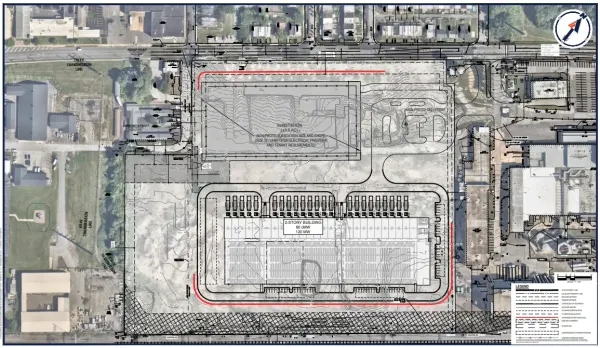
On August 11, 2026, Link Logistics filed a request for a preliminary zoning determination, asking if a data center at the 4401 Ridge Road property would be permitted by right under the Trainer Zoning Ordinance. The site had been previously approved for logistics center or warehouse use. Its request includes an image of a test-fit plan for a data center with a two-story building using approximately 120 megawatts of electricity, an adjacent 3.6-acre substation, internal circulation, and supporting infrastructure. Link Logistics defines a data center as a building occupied primarily by computers or telecommunications and related equipment where information is processed, transferred, or stored.
Their proposal would include equipment necessary for data processing and storage as well as related electrical, mechanical, and stormwater infrastructure. It also includes outdoor equipment to provide power capacity, backup power, and cooling. This equipment could comprise battery storage, diesel- or natural gas-powered backup generators, natural gas storage facilities, transformers, switchgear, uninterruptible power supply systems, power distribution equipment, and rooftop air-cooled chillers. The proposal also contains accessory uses and structures such as utility lines, non-contact cooling-related facilities, wastewater facilities, water holding facilities, pump/compression stations, redundant data communications connections, lighting, and telecommunications duct banks and vaults.
Preliminary Determination from the zoning officer
On August 31, 2026, the zoning officer issued a preliminary opinion finding that a data center, its equipment and its accessory structures would be permitted by right in the I-2 industrial district, subject to other ordinance requirements and government approvals. The zoning officer’s letter refers to the development as a “Warehouse for a Data Center” although the request from Link Logistics calls it a data center.
What does the determination mean?
The borough of Trainer is divided into zones for separate uses: residential, commercial, and industrial. The industrial zones may be classified as I-1 (light industrial) or I-2 (general industrial). The code says its industrial rules are meant to reduce industry’s negative impact on residential and shopping areas. The lot where Link Logistics wants to build a data center is located in an I-2 district, although it is across the street from a residential district.
Within each zone, there are by-right and conditional uses. A by-right use is automatically allowed on a property. It requires a routine permit to ensure that building codes are met, but it is generally straight-forward. A conditional use has a more complex approval process, often including a public hearing so that local residents can voice their concerns.
Trainer borough's code can be found in full online at ecode360.com/TR2473. The zoning code is located in Chapter 265.
Appeal from the Church
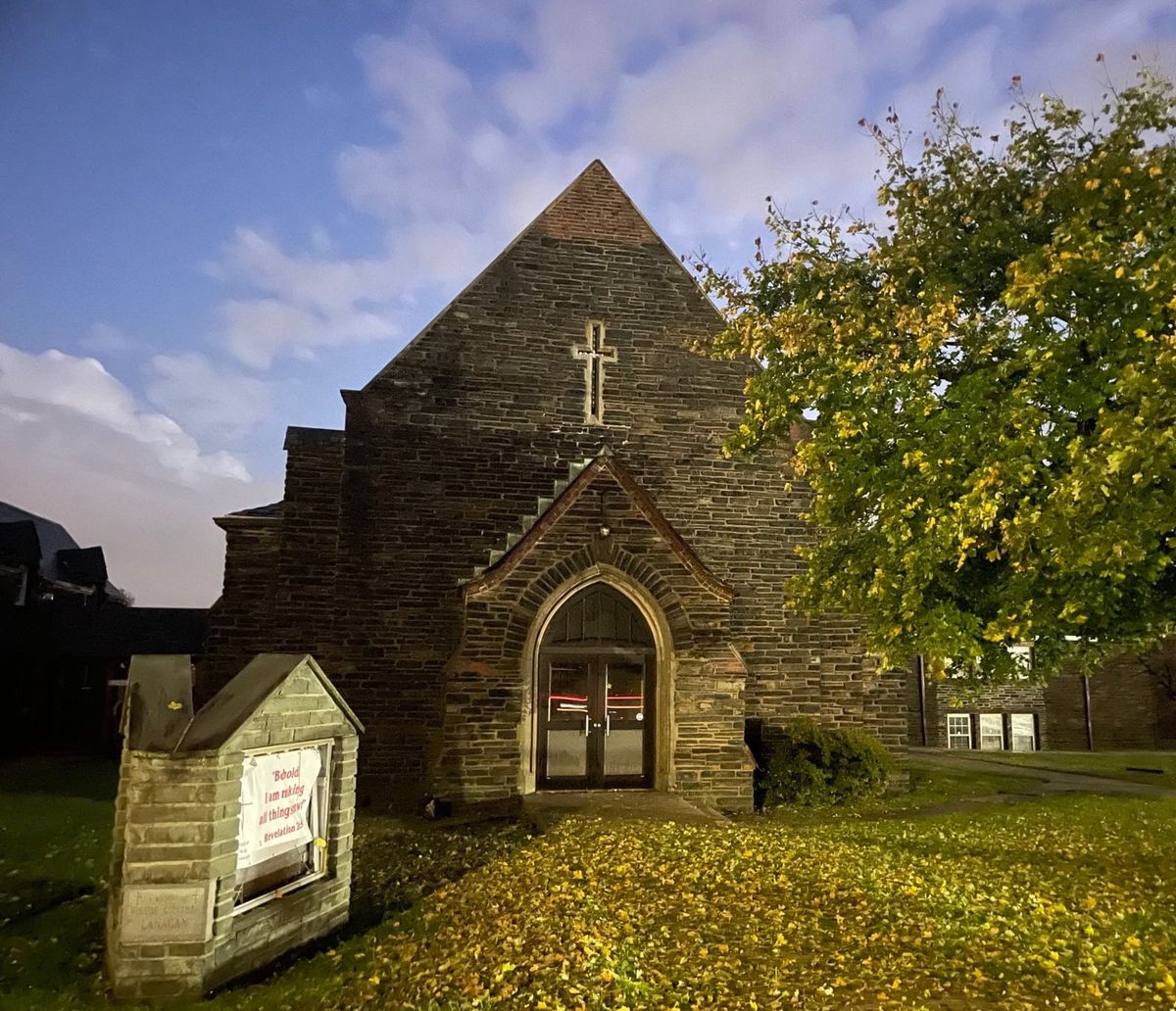
Trainer United Methodist Church filed a substantive validity challenge in response to the zoning officer’s favorable preliminary opinion. The church is located at 3705 West Ninth Street, approximately 0.6 miles from the proposed data center site, and the lot is visible from church property. The church congregation was chartered in 1895 and is actually older than the borough of Trainer. The property is still used today as an active place of worship.
In the appeal, the church alleges that the use of the property described by Link Logistics in their request has reasonably associated impacts. These include noise, low-frequency mechanical sound, vibration, lighting, construction and truck activity, as well as traffic and access effects. The electrical requirements outlined in Link Logistics’ request could also impact the public-service infrastructure.
The church building is more than a century old and has documented age-related issues such as roof-tile failure and cracks in interior walls, which may be worsened by nearby heavy construction or operational vibration.
The appeal challenges Sections 265-13, 265-24, 265-26 and 265-39 of the zoning code, as well as Article VI (Airport District Overlay) and Chapter 170 (Noise control). The appeal advances two alternative arguments. First, the Zoning Code as written does not permit a data center by-right, and Second, the inconsistency and lack of standards in the Zoning Code make it vague enough to be enforced arbitrarily.
The appeal’s main argument is unclear rules
Section 265-13(B) of the code states that any use not permitted in this code is deemed prohibited, and that the provided list of prohibited uses are not exhaustive, they only serve as examples. However, the code does not name any permitted uses in the I-2 district, only prohibited uses. The language as written suggests that any use would be deemed to be prohibited.
Link Logistics’ request for the zoning determination acknowledged that data centers are not specifically listed in the zoning code as either permitted or prohibited, but asked for and were granted a by-right determination anyways. The appeal argues that the code does not offer enough information for people to determine which industrial uses are permitted by right and by what standard an undefined use could be categorized.
The appeal cites two other cases in Pennsylvania that set a precedent for statutes being deemed void due to vagueness (Farley v. Zoning Hearing Board of Lower Merion Township and Boron v. Pulaski Township Board of Supervisors).
The appeal also challenges the characterization of this proposal as a “Warehouse for a Data Center.” Link Logistics’ request referred to it as a data center with extensive infrastructure for energy generation, fuel storage, and cooling facilities. The church asks the board to consider if there is a basis for the phrase “Warehouse for a Data Center” in the ordinance.
Standards should be proportionate to the intensity of use
The appeal argues that the I-2 rules do not appear to set standards for electrical demand, on-site power generation, noise, vibration, water demand, lighting, setbacks from homes, or round-the-clock operation. It argues that allowing a potentially high-intensity complex by right under those rules is arbitrary and unreasonable, and lacks a substantial relationship to the code’s goals of protecting public health, safety and neighborhoods.
The church requests a hearing to review evidence regarding the impact of the proposed data center as it is described in Link Logistics’ request.
Impacts banned in every district
Section 265-39(E)(1) of the Zoning Code includes prohibitions for all zoning districts. This section prohibits uses that are objectionable because of air pollution, discharge of waste that could damage soil or water, noise, vibration, light, or other disturbances that are perceptible beyond the lot. The appeal argues that the equipment Link described, including transformers, generators, battery and fuel storage, and cooling equipment, touches on several of those categories.
The appeal argues the zoning code doesn’t explain how a project with these systems can qualify as by right while also meeting this section, and that the section lacks comprehensive measurement standards.
The church noted that its property is 0.6 miles from the lot and the sanctuary is oriented toward the site, so any off-lot noise, vibration, and light are relevant to its challenge. It asks the board to identify what factual basis the zoning officer had to determine that the systems described in Link Logistics’ request would comply with the All-District prohibition.
Noise Control Ordinance
Chapter 170 of Trainer’s code regulates noise control. It requires that any borough department reviewing or approving new projects that may result in sound or vibration must first consult with the Chairman of the Public Safety Committee. It also states that no new structure on commercial or industrial districts will be approved for construction unless the owner demonstrates compliance with the Noise Control Ordinance. This chapter specifically identifies churches as “noise sensitive activities.”
The appeal argues it is unclear how these requirements apply to a by-right use, and that the absence of a clear process for evaluating the noise contributes to the uncertainty and inadequacy of the regulations.
The church says it is aware of no evidence that a noise study was done before the opinion was issued, or that anyone consulted the chairman of the Public Safety Committee. It asks the borough to produce any such records.
Airport compatibility
One section of the borough’s code covers safety issues with the nearby Philadelphia International Airport. It generally regulates height of structures, as well as any uses that could create electrical interference with navigation or communications. The proposed data center includes electrical systems, communications, lighting, and rooftop infrastructure. The appeal asks if there was any PennDOT submission or safety analysis regarding the airport that the zoning officer had considered before issuing his preliminary opinion.
Public infrastructure, environmental, and site-suitability factors
State law requires that the board, for this appeal, consider matters such as public service facilities, suitability of the site, and adverse environmental impacts. The church reports chronic stormwater and drainage problems affecting their property, and industrial truck activity affecting congregants traveling to worship. The appeal requests evidence concerning the current capacity and the impacts that would come from the proposed development. It also requests evidence concerning anticipated electrical demand, proposed utility upgrades, generator number, fuel and battery storage, cooling technology, anticipated water demand, wastewater, stormwater and impervious coverage, construction and operational traffic, fire and emergency response, hazardous material, and the relationship to nearby residential and institutional uses.
Former Congoleum environmental covenant
The appeal cites EPA records describing an environmental covenant on the former Congoleum property that reportedly requires reporting for any work that could affect contamination. The appeal argues that if the project overlaps the covenant area, evidence about contamination, groundwater and utility work is relevant. The appeal requests a map showing the exact areas affected by the covenant and Link Logistics’ site plans that would impact those areas.
Accessory-use classification
The preliminary opinion considers a range of equipment as “Data Center Accessory Uses and Structures.” However, Trainer’s code defines an accessory building or use as being subordinate in area, extent, and purpose to the principal building or use. The proposal includes a 3.6-acre electrical substation and additional facilities such as generators, fuel storage, and cooling equipment. The appeal argues these facilities should not automatically be treated as accessory uses unless they are shown to meet the code’s standard that they are subordinate in area, extent, and purpose.
For the purpose of this appeal, the church requests that the board examine how the code allows for a 3.6-acre electrical substation to be treated as an accessory facility rather than a separately regulated use. The appeal states that without a clear standard for “accessory uses,” the current regulations risk allowing substantial facilities to receive by-right treatment simply by labeling them as “accessory.”
Borough’s stated planning purposes
Trainer’s code regarding industrial districts states that it seeks both economic use of industrial land and a reduction of negative impacts on residential areas. The appeal argues the zoning rules must therefore reasonably account for nearby residents and institutions. Link Logistics’ request disclosed substantial electrical requirements, so the appeal requests evidence concerning how the proposed electrical demand would affect public-service capacity and reliability.
Protection of a historic community resource
State law requires zoning ordinances to provide for the protection of natural and historic features and resources. The appeal notes that the church was chartered in 1895 and its present building was dedicated in 1928. The appeal argues that allowing the by-right use of a data center according to the I-2 regulations does not consider or mitigate impacts onto the historic church.
Requests from the church
The appeal ends by requesting relief from the Zoning Hearing Board. It asks for a complete record underlying the August 31st preliminary zoning determination, including all submissions and materials before the zoning officer that he used to make his determination. They also request a public evidentiary hearing to demonstrate how the proposed data center would impact nearby properties. If the challenge succeeds, it asks the board to recommend amendments to the code.